

Evolution of Planning Policy in Rural Areas
Why the decision to begin, not the time available to work on it, is what separates the rural businesses that build new income streams from those that don’t.
Between May and July this year, we had some great conversations with farmers and landowners.
We would sit down with each of them, discuss their business, their current challenges, aspirations and objectives, and set out what we believed needed to happen to progress their business and their plans to diversify. The reaction was typically very positive: “Yes, that’s worth looking at properly.”
The next time we spoke with many of these landowners, we faced an all-too-familiar conclusion: “We’ll pick it up after harvest,” or “we’ll see how harvest goes and then decide later in the year.”
This reaction is entirely understandable. Harvest is one of the few seasons in the farming calendar when almost everything else becomes secondary, particularly this year, as it has been a short, intense and somewhat lacklustre harvest for many. When the crops are fit to combine after a year of spending on inputs and carrying out fieldwork, there are, perhaps, more pressing things to think about than planning policy, site constraints or feasibility studies.
The difficulty is that most assume waiting until after harvest (or any other peak seasonal workload) costs them a few months. In reality, it often costs a lot more — not because a farm diversification project always takes a year to mobilise, but because of everything that sits behind it: ecology survey windows, planning programmes, consultant appointments, funding decisions and business planning.
Across the farms and estates we work with, some of the most expensive delays are not caused by planning refusals or technical problems. They are caused by simply not starting.
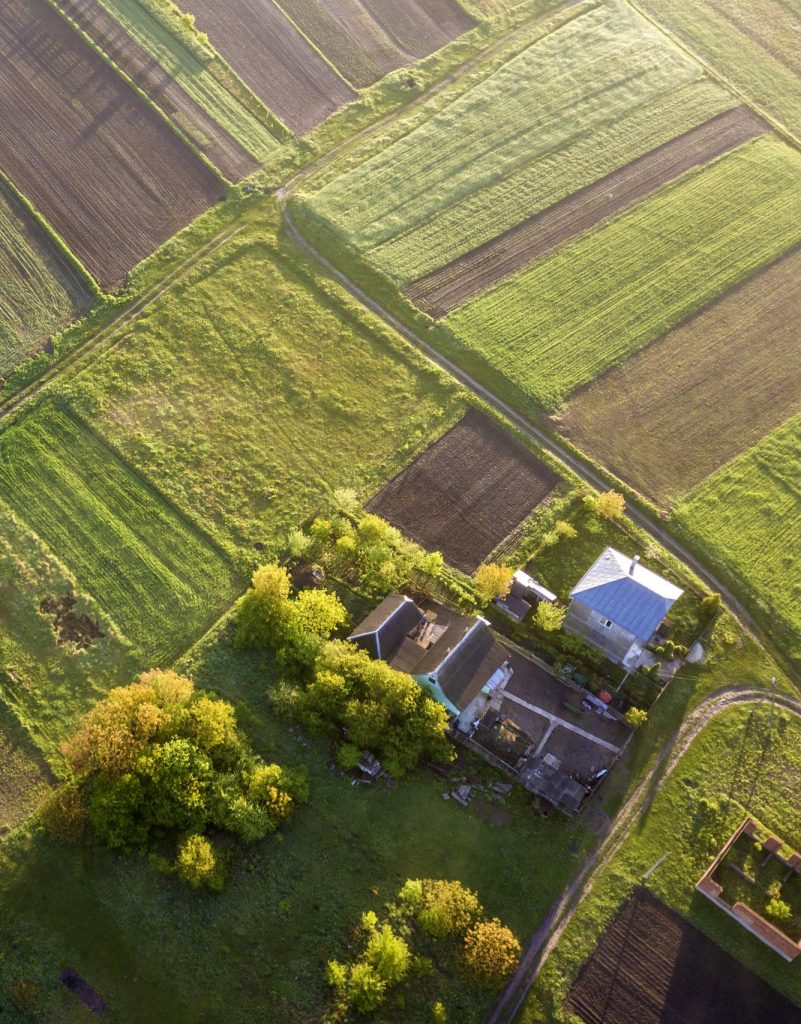
Why Farm Diversification Planning Should Start as a Priority
The short answer: delaying the first decision delays everything that follows. A redundant farm building may be identified for commercial workspace in May, but if the project is parked until September, winter can arrive before the feasibility study is complete and the professional team is appointed.
That four-month pause rarely affects just one stage. Planning, design, funding, tendering and construction all move with it. The effect is greater on large, phased or multifaceted projects, where each decision and approval depends on several others.
There is rarely a perfect time to begin, but delaying the start delays the whole programme.
The Hidden Calendar Behind a Diversification Project
Some delays are particularly costly because key surveys can only be completed at certain times of year.
Planning applications (save for Permitted Development) may require ecology surveys — bats, breeding birds, great crested newts and reptiles — each with its own seasonal constraint. If a preliminary ecological appraisal (PEA) undertaken in October identifies further survey requirements, the project may have to wait until the next suitable season before the planning application can progress.
A four-month pause can therefore become a twelve-month delay.
The issue is not that ecological surveys are required; that is simply an easy example. It is discovering, too late, that a delay has wider implications for the programme.

Does Farm Diversification Require Your Constant Time and Attention?
No — most of the work happens in the background. There is a common misconception sitting behind the decision to wait: that a business review, farm diversification assessment, estate masterplan or project stage will consume a large amount of the landowner’s time. In reality, it rarely does.
The way we work at Dudley Peverill Associates is to keep the client engaged throughout, but only where they are genuinely needed — at key decision gateways. This prevents a drain on their time and resources, which is a key value-add of any good rural consultancy.
As with most consultants, once a client’s objectives are understood and agreed, the majority of the heavy lifting is undertaken by the advisory team. For example:
- Policy reviews
- Planning assessments
- Constraints analysis
- Permitted development testing
- Utilities investigations
- Highways considerations
- Flood risk reviews
- Ecology scoping
- Market assessment
- Financial appraisal
- Phasing and sequencing
The overwhelming majority of this work can progress while harvest, drilling, lambing, calving or other operational priorities continue uninterrupted. That is why the decision to start — and to build an effective advisory team early — often matters more than the time available to work on the project personally.
The Policy Environment Rewards Prepared Businesses
There is another reason delay is becoming more costly: the policy, cost and commercial environment does not stand still while a project is parked.
The way planning fees are set in England is about to change, and all applicants, including farm businesses, will feel it. Subject to parliamentary approval, a new national fee schedule takes effect on 8 December 2026, calculated at circa 90 per cent of what it costs a council to determine an application. Prior approvals become more expensive — including the routes behind Class Q, Class R and agricultural development — and a flat charge is extended to prior approvals that are currently free.
Local-authority-level fee setting comes next, but not on the same day. The Planning and Infrastructure Act 2025 lets councils set their own fees, and the regulations to enable that are expected before the end of the year. Authorities will be able to charge up to 30 per cent above the national figure where they can evidence higher costs, and will have to consult the Housing Secretary to go beyond it. The practical effect is that the same application will not cost the same everywhere for much longer, and the December schedule is a floor rather than a fixed price.
Timing therefore matters. The new fees apply only to applications made on or after 8 December, and the trigger is the date of submission, not validation or determination. A well-prepared application submitted before then pays today’s fee even if the council does not decide it until well into 2027. For a single application the difference may be manageable. Across a phased or multifaceted diversification project — where a fee is payable for the application, then the conditions, then the amendments, then each prior approval — it accumulates, and getting the application right first time is worth more than it was.
Planning policy carries the same lesson. Class Q and Class R are valuable routes today, but they sit in permitted development legislation that can be amended at short notice, as Class Q was in 2024, or withdrawn locally by an Article 4 direction. National planning policy is being rewritten in parallel.
None of this should cause panic, and it is just one example. Starting now does not mean rushing into an application or committing to a project without understanding the numbers. It means understanding the business objectives, assessing the buildings and land available, testing the options and identifying the right planning route before circumstances force a decision.
A business that has already done that can move quickly when policy, costs or market conditions change. A business starting from zero is slow and reactive.
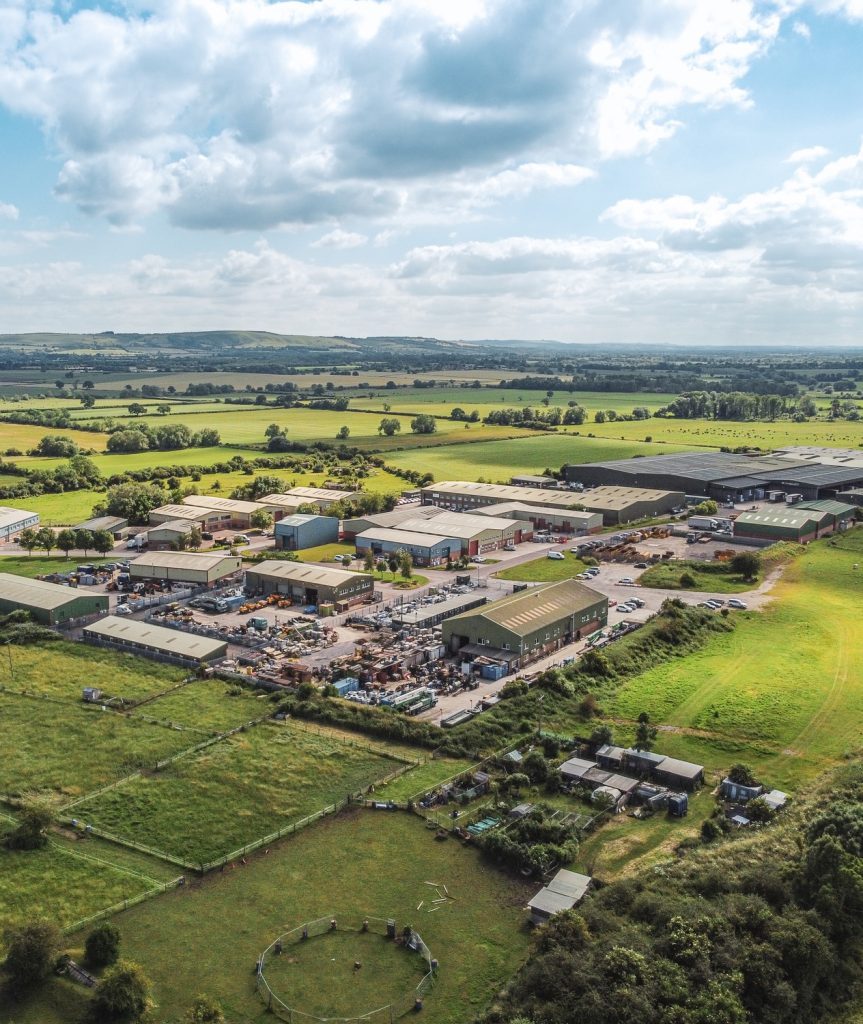
Farm Diversification Is Now the Majority Position, Not the Exception
It is also worth recognising how common farm diversification has become on UK farms. The majority of farm businesses in England now undertake some form of diversified activity, and the question is no longer whether farms diversify — most already need to. Our most recent farm diversification survey shows that 70% of farms are now diversified, up from 42% in 2024, and 100% of respondents cited diversification as an absolute necessity for profit.
The most important question for landowners considering diversification is whether those activities will generate meaningful income relative to the capital invested and management time required. Some diversified enterprises become highly valuable long-term assets; others absorb capital, management effort and opportunity without delivering substantial returns.
The difference is rarely the enthusiasm behind the idea. More often, it is the quality of analysis that took place before the investment was made — which is why a whole-holding approach matters. A building that looks suitable in isolation may be far more valuable as part of a wider yard redevelopment. A scheme that appears attractive today may prevent something significantly better tomorrow.
Looking at individual opportunities one by one can unintentionally close off future options. Looking at the holding as a whole helps protect them.
The Hidden Value of a Diversification Masterplan
A diversification masterplan is not about producing a document for its own sake; it is about reducing the cost of wrong decisions. It provides a structured assessment of the holding’s opportunities, tested against planning policy, physical constraints, market demand and commercial reality.
An estate masterplan helps answer questions such as:
- Which opportunities are genuinely viable?
- Which buildings are best suited to which uses?
- What planning routes are available?
- Where are the greatest risks?
- What should happen first?
- What should never happen at all?
The most valuable outcome is often not identifying a project to pursue; it is identifying the projects to avoid. Preventing one poor investment frequently creates more value than finding one new opportunity.
What Starting Now Actually Looks Like
If diversification has been sitting on the to-do list during harvest, the next steps are relatively simple.
1. Book the site walk early. The period between harvest and Christmas is traditionally when many deferred projects suddenly reappear — and advisers’ diaries fill accordingly.
2. Assess the holding as a whole. A building-by-building approach often creates unintended constraints elsewhere; a whole-holding view protects your future options.
3. Scope technical input requirements early. Even if no surveys are ultimately required, understanding the position before winter helps avoid costly surprises.
4. Bring professional advisers into the conversation early. Accountants, agents and planners often contribute valuable insight before significant decisions are made.
5. Be clear about the objective. Replacing lost income, supporting succession, creating retirement income, generating employment for the next generation or improving capital value can all point towards very different projects.

The Point
Peak seasonal workloads are not usually the reason diversification projects stall; they are the reason projects are allowed to stall. Once momentum is lost, the consequences tend to last much longer than harvest itself.
The farms and estates generating new income streams in the coming years will not necessarily be the boldest. In many cases, they will simply be the businesses that decided to begin.
If diversification has been sitting on your to-do list since spring, now is a good moment to revisit it — not because action is urgent, but because clarity is valuable, and the sooner you understand your options, the more choices remain available.