

I spent part of last week with the CLA, both at a rural professionals’ conference and around the table with a local steering group. The conversations were varied, but the underlying concern was consistent.
Landowners are not short of ideas.
What they are short of is confidence that those ideas will still make sense once grid reform, planning policy and regulation have had their say.
Increasingly, success is less about what you propose, and more about where your idea sits within national priorities and finite capacity.
The grid: a finite resource, not an abstract one
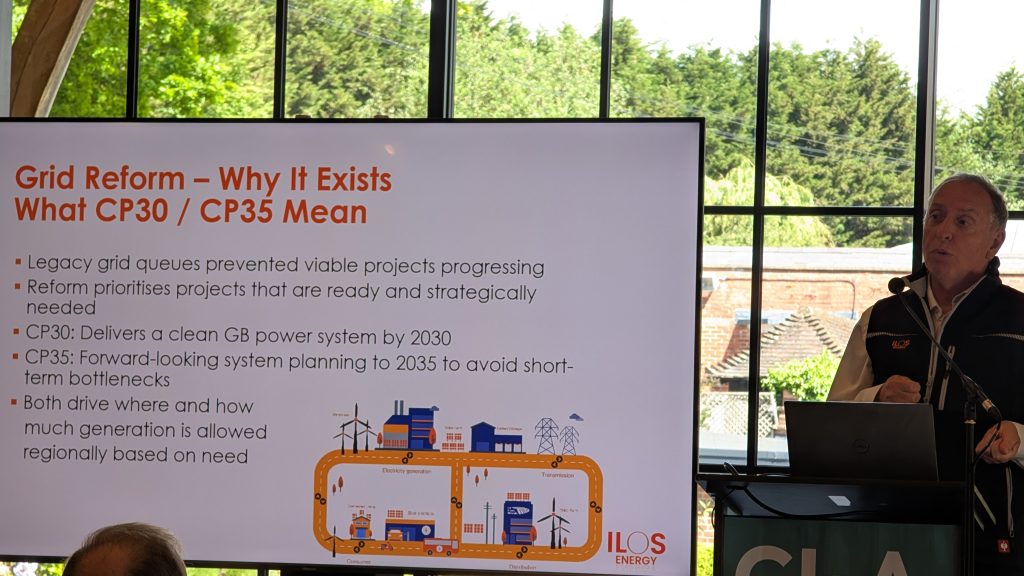
It’s easy to talk about “the grid” as if it were elastic. In reality, it is being rationed technology by technology, region by region.
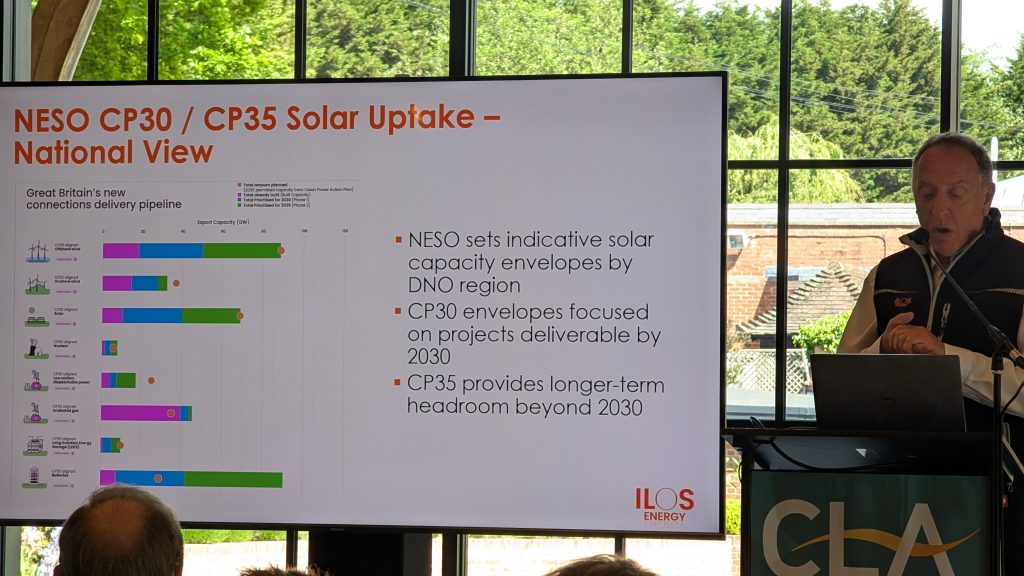
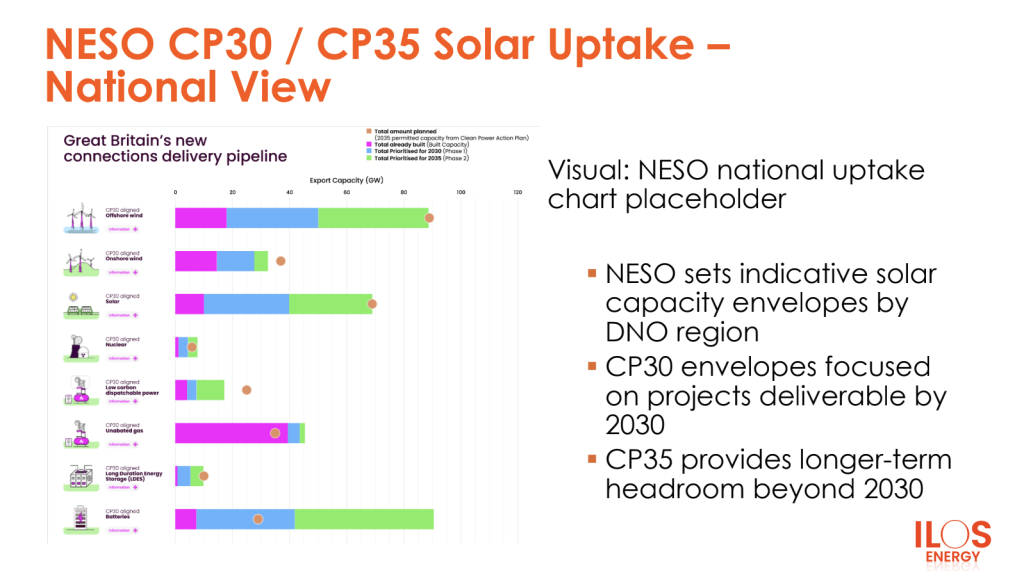
National Energy System Operator (NESO) data shows that indicative solar capacity envelopes are already heavily allocated in many areas, particularly for projects expected to be delivered by 2030. These envelopes are not targets; they are practical limits based on what the system believes can realistically be connected and built in time.
This is why two apparently similar solar schemes can face very different outcomes. One may still sit inside remaining headroom. Another may already be competing for capacity that, in practice, no longer exists.
Battery storage illustrates the same point from a different angle. Industry applications now exceed the capacity being prioritised for delivery this decade. Even where policy support remains strong, that imbalance alone makes additional allocations harder to secure.
The behavioural trap here is obvious: once money has been spent on design and promotion, it becomes emotionally difficult to step away, even if the structural odds are worsening.
Gate 2: why readiness now matters more than optimism later
Looking ahead, grid reform adds another layer of discipline.
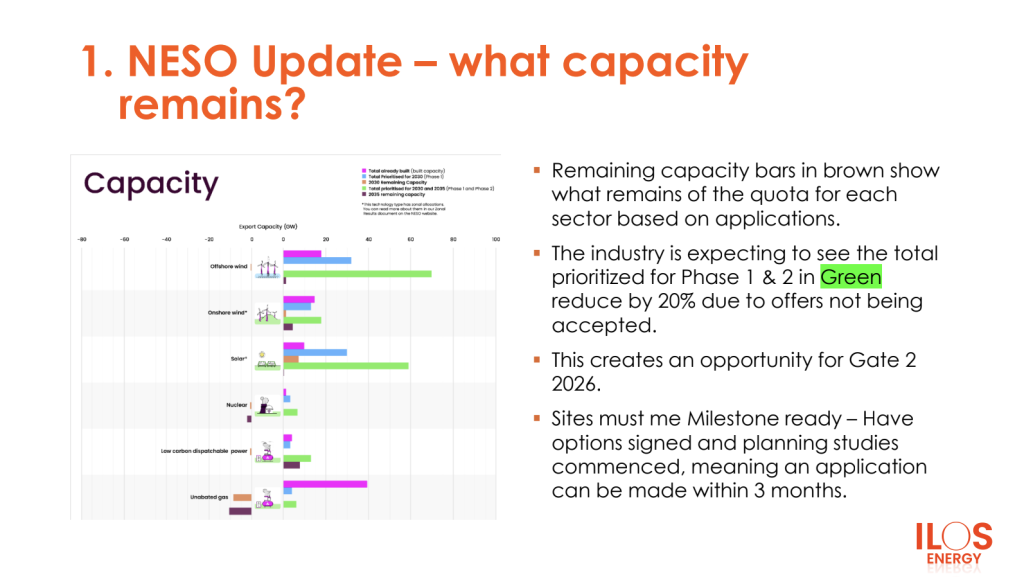
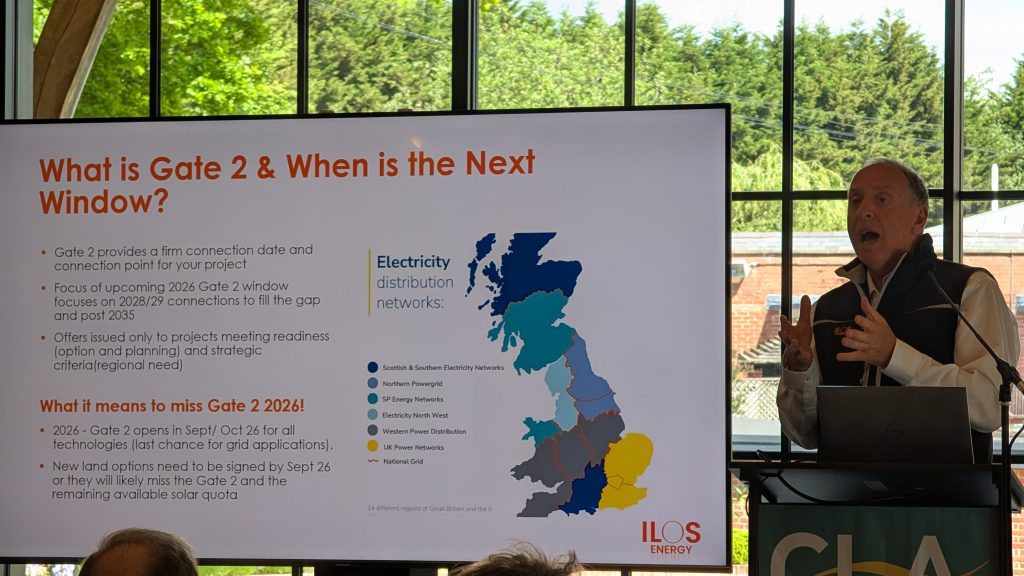
NESO’s own updates indicate that remaining capacity is being tightly filtered through milestone readiness. Projects without land options signed and planning work underway risk falling out of the queue altogether. Industry expectation is that unaccepted offers could reduce available green-lit capacity by around 20%, creating limited but competitive space for those ready to move at the next gate.
This is not about rushing. It is about understanding that optionality itself now has a deadline. Land that is not properly tied up may simply miss the window.
When the answer isn’t the grid at all
Interestingly, the tightening of grid access is quietly pushing some of the more resilient thinking in a different direction.
Rather than asking how to export power onto an already-congested system, some landowners are looking laterally:
Who nearby already needs large amounts of energy?
Private wire arrangements: supplying power directly to a neighbouring industrial or infrastructure user, can bypass some of the systemic constraints entirely. These are not quick wins, but they often sit on firmer ground because they are built around an existing demand, not a speculative export.
Often the opportunity is not in the field itself, but in the relationship just beyond the farm gate.
Environmental markets: policy still catching up with practice
The same need for context applies to environmental income.
England’s land use framework shows, at a national level, that housing, food production, nature recovery and clean energy can coexist. But on individual holdings, the experience is less tidy.
Biodiversity Net Gain (BNG) is already exposing the gap between policy intent and delivery. We see projects delayed by local authorities unsure how to apply conditions, alongside others where landowners are investing in biodiversity units for sale.
Recent Defra announcements on exemptions will materially reduce demand in parts of the residential market. Estimates suggest that changes around small sites alone could reduce off-site unit demand by around 10%, with further reductions possible depending on how wider exemptions are defined.
For landowners, that doesn’t mean BNG is “over”. It does mean assumptions need to be stress-tested, not inherited from last year’s spreadsheet.
Why structure beats speed
Across energy, development and environmental schemes, a pattern keeps repeating.
The greatest risk is not missing the next opportunity.
It is committing land, capital or relationships to the wrong one, at the wrong moment, because it felt like progress.
A proper options appraisal doesn’t kill ambition. It protects it. It places individual ideas inside the wider system, policy, capacity, planning and commercial reality, and asks which routes still offer a defendable position.
Sometimes the answer is to proceed.
Sometimes it is to pause.
Occasionally, it is to walk away early and cheaply.
Across the estates we work with, the most resilient outcomes tend to come from those who lift their heads up first, reading the wind, rather than leaning harder into it. If you’d like an informal conversation about the next chapter for your business, we’d be pleased to help. Get in touch to start the conversation.